Court Differences
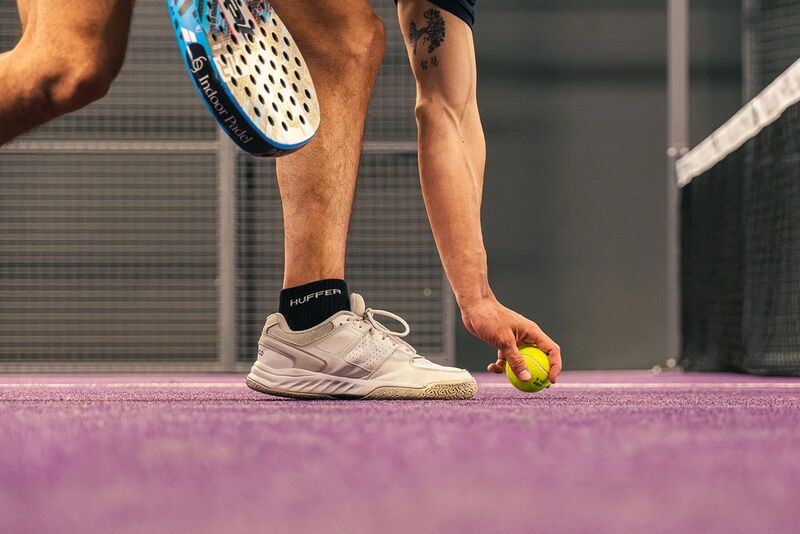
The most obvious difference is court size and design. A padel court is roughly one-third the size of a tennis court, enclosed by glass walls and mesh fencing.
Size Comparison
- Padel: 20m × 10m (200 square metres)
- Tennis: 23.77m × 10.97m for doubles (261 square metres)
- Net height: Padel net is slightly lower (0.88m) than tennis (0.914m)
Tennis courts are open-ended, while padel courts are fully enclosed. This creates a completely different game dynamic. In tennis, hitting the ball out of bounds ends the point. In padel, the walls keep the ball in play, making rallies longer and more strategic.
Equipment Comparison
Rackets
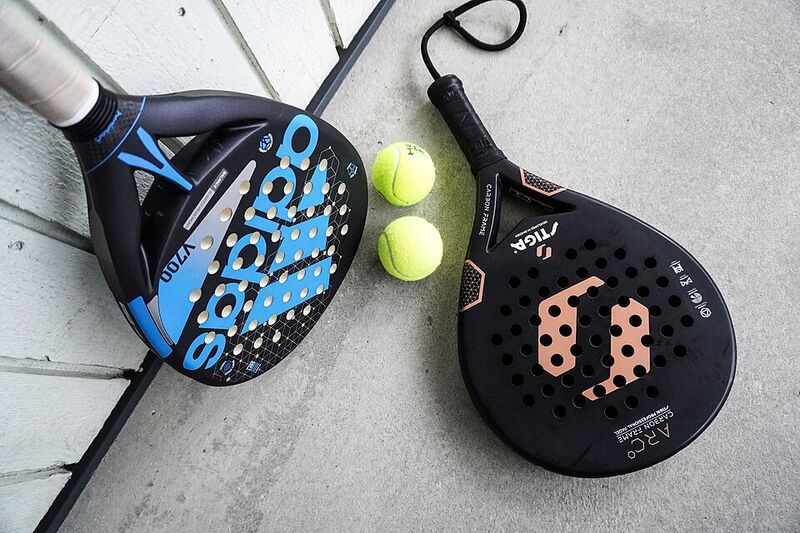
Padel rackets are solid paddles with holes, while tennis rackets have string surfaces. This fundamental difference affects everything from power to ball control.
- Padel rackets: Solid face with holes, shorter handle, typically 350-370g
- Tennis rackets: String bed, longer handle, 270-320g
- Power source: Padel relies on technique and timing, tennis on string tension and swing speed
Balls and Other Equipment
Padel balls look identical to tennis balls but have slightly lower pressure, making them slower and easier to control. Both sports use similar court shoes, though padel players often prefer shoes with better lateral support for the quick direction changes.
Rule Variations
While both sports use tennis scoring (15, 30, 40, game), the gameplay rules differ significantly.
Serving Rules
- Padel: Underhand serve only, ball must bounce in service box before hitting walls
- Tennis: Overhead serve, can serve anywhere in the service box
Wall Play
The biggest rule difference is wall usage. In padel, after the ball bounces on your side, you can play it off any wall. This creates unique tactical opportunities that don't exist in tennis.
Doubles vs Singles
Padel is always played in doubles, while tennis offers both singles and doubles formats. This makes padel inherently more social and reduces the physical demands compared to tennis singles.
Playing Technique
Groundstrokes
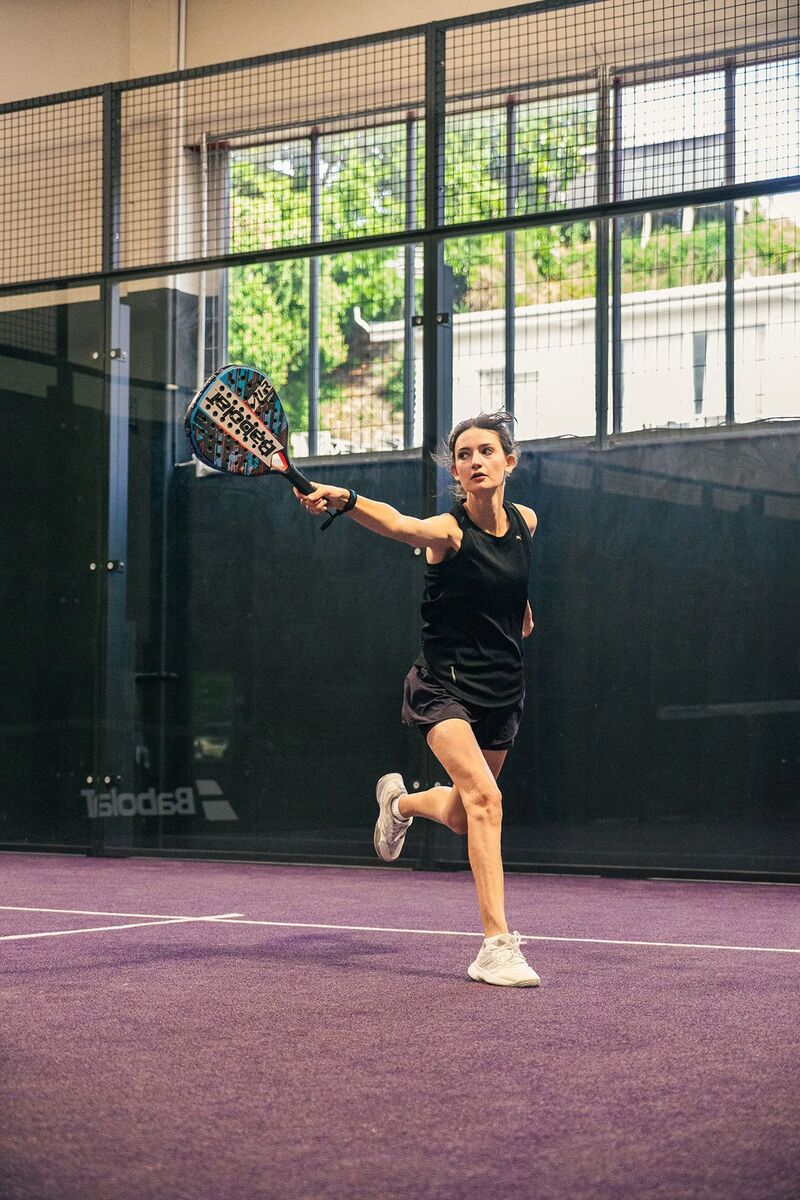
Tennis groundstrokes use the full swing of a stringed racket to generate topspin and pace. Padel groundstrokes are more compact, focusing on placement and setting up the next shot rather than hitting winners.
Volleys
Both sports use volleying, but padel volleys are generally softer and more strategic. The solid paddle face makes it easier to control direction but harder to generate the sharp angles possible with tennis racket strings.
Unique Padel Shots
Padel has developed unique shots that don't exist in tennis:
- Bandeja: Overhead shot hit with underspin
- Vibora: Aggressive downward shot with sidespin
- Chiquita: Soft return that barely clears the net
Tennis players learning padel need to develop these new shots while unlearning some tennis habits, particularly the instinct to hit for immediate winners.
Which Is Easier to Learn?
Most people find padel easier to pick up and play immediately, though both sports require time to master.
Padel Advantages for Beginners
- Smaller court: Less running, easier to reach balls
- Walls help: Difficult shots can be played off the back wall
- Underhand serve: Much easier to learn than overhead tennis serves
- Always doubles: Partner helps cover court, less pressure on individuals
- Forgiving equipment: Solid paddle face is more predictable than strings
Tennis Advantages
- More courts available: Easier to find places to play
- Individual sport option: Can play singles without needing partners
- More established coaching: Deeper pool of instructors and resources
Learn the official padel rules | Getting started guide | Equipment recommendations
Last reviewed: March 2026
Social Experience
Both sports offer great social opportunities, but in different ways.
Padel Community
Padel's mandatory doubles format creates natural foursome friendships. The enclosed court and proximity to other players makes chatting easier between points. Most padel facilities have strong social cultures with regular mixers and club events.
Tennis Community
Tennis offers both individual achievement through singles and team dynamics through doubles. The longer-established tennis community in New Zealand means more clubs, leagues, and organized competition at every level.
Family Friendly
Padel's smaller court and easier learning curve make it more accessible for mixed-age and mixed-ability groups. A family can enjoy a decent game much sooner than in tennis.